AI is developing at a breakneck pace, and major players like OpenAI have explicitly stated that the development of Artificial General Intelligence (AGI)—AI that can essentially replicate human-level capabilities for any task—is their core mission. Until recently, AGI was considered only a distant possibility, but recent developments have even the skeptics wondering if we might be on the cusp of AGI.
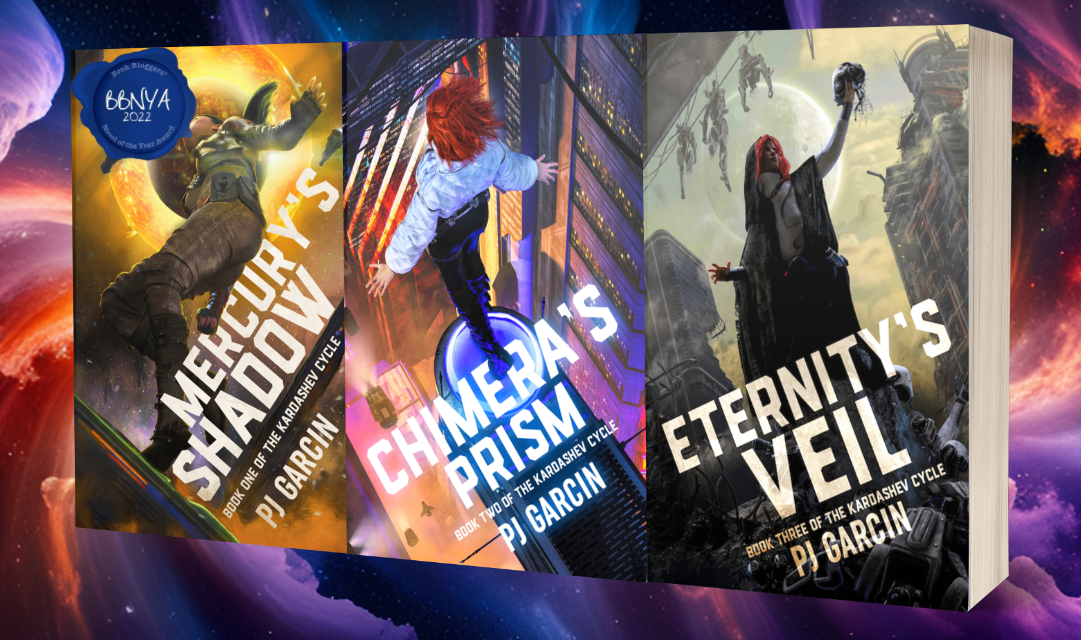
The Kardashev Cycle takes place in a post-AGI world. At the point that Mercury’s Shadow starts, around 2115, AGI is so commonplace that it’s not even really talked about anymore. In this world, everyone owns a personal robot who works for them as a proxy, and the robots are just accepted as part of society. The dominance of robots in society is central to the plot of the series, but the origins of that AGI are only lightly touched on in Sol’s Dawn story “The Great Expansion”. In this story, set in 2045, the first round of humanoid robots that are AGI capable are unveiled.
Subscribe
However, something that does not appear in any of the stories, is that the canonical date for the introduction of AGI in the Kardashev universe is 2024. Here’s the excerpt from my raw notes verbatim:
In 2024, nearly a decade earlier than expected, the first AGI was unveiled to the world. It was not in the form of a robot, and it wasn’t a superintelligence, but it was an AI that could understand natural language, could be taught tasks, and could learn just about any task a human could without requiring highly regulated data and thousands of trials and errors. This AI was the product of nearly a decade of research and training, and its rather underwhelming unveiling would end up transforming global society as we know it.
The parallels with the pace of development of AI in our world, and specifically LLMs (Large Language Models), is striking to me. I also find it very interesting that there is such a strong push for regulation amongst these large players. While there are obviously risks with this technology, the concentration of such a transformational technology into the hands of a single (or limited number) of corporate entities should be viewed very skeptically.
In the Kardashev universe, Alton Neal’s company essentially dominates all commerce and politics in the system. Again, it’s not explored in any of the stories, but I imagine that his strategy to achieve this was regulatory capture. You can see Alton’s disdain for governments from the very beginning in “The Landing”, where he spitefully cancels a meeting with the president after a successful rocket landing.
By the time Mercury’s Shadow begins, there are no other competitors and even the countries of the world are effectively customers of the Kardashev Corporation. Alton almost certainly would have done this with regulatory capture. He would play them against each other, amplifying their fears about the technology, all to establish a bar for development that only his mega-corporation could meet.
In his mind, he’s a visionary, helping transform human society and elevate everyone’s lives. He even views them as a vehicle to institute some kind of Universal Basic Income scheme (which of course will enrich him). This passage from “The Great Expansion” highlights this vision:
“No, it’s more than that, Vince—they’re for everyone,” he stated. “My vision is that literally every person in the system will own one of these robots.”
“They’ll do everything,” he continued. “They’ll work for you, fix things for you, clean for you, cook for you.”
Vince looked unsure.
“They currently cost in the millions of dollars to produce, Alton.”
“So what? What’s a few million dollars spread across a lifetime of earnings? Wouldn’t you pay millions to never work again?”
“It will be like buying a house,” he continued. “People will mortgage them and use the robot’s future earnings to pay itself off.”
“They’re going to get paid?” asked Vince.
“Well of course! They’re not slaves!” said Alton.
The implications of this arrangement—that individuals own the robots outright—provides the catalyst for the entire series. I considered that it might be more dystopian for him to rent the robots to people, but the relationships that people have with specific robots is so central to the story, that I pivoted to the idea of mortgaging the robots. It turned out to have interesting repercussions in universe.
There are undoubted benefits to AGI in this universe beyond the vast monetary gain and power it gives to Alton Neal. Chim (the protagonist) and her labor bot, Quince, are truly best friends. They are family. As a child growing up on a mining station in the belt, she doesn’t have regular human friends, she only has him. But his AGI allows him to interact with her like a human, and the books explore Quince’s internal state and whether or not, in his own way, he can actually care for Chim in the way that she does for him.
Whether AGI is a force for good or evil is as grey in the real world as it is in the books. It will undoubtedly be a transformational technology, and it’s arguable that the more open and democratic it is, the better. The more it is regulated and controlled by large corporations, the more the game is rigged in their favor, and the more the world starts to resemble the kind of unipolar system of the Kardashev universe.
If you found this interesting, I encourage you to dive into Sol’s Dawn , which you should have received for free when you signed up for this newsletter. Reply to this post if you don’t have a copy and I’ll hook you up.
What do you think? Should AI be tightly regulated and controlled? Or should it be open source and available to all? Do you think we’re close to achieving a human-level AI? Leave a comment and let us know!
Subscribe